This is just a wee post to highlight some the steps I went through to get to my final piece in Project 10 of Textiles – A Creative Approach with the OCA.
I went through many steps, it’s meant to be a design process after all. However, there were definitely times when I felt as if I was undesigning, redesigning or plain just not-designing at all.
Firstly there was a theme book…
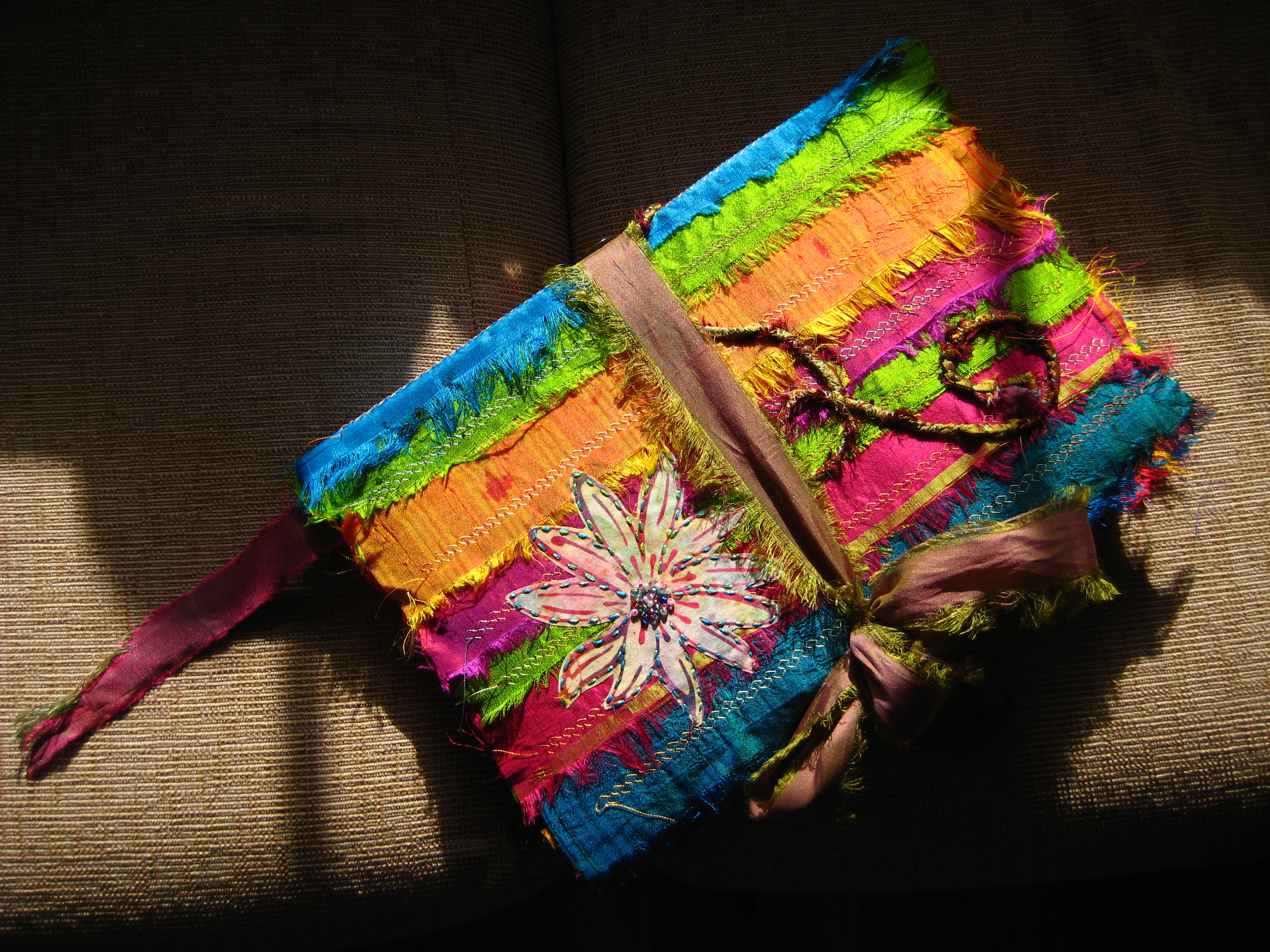
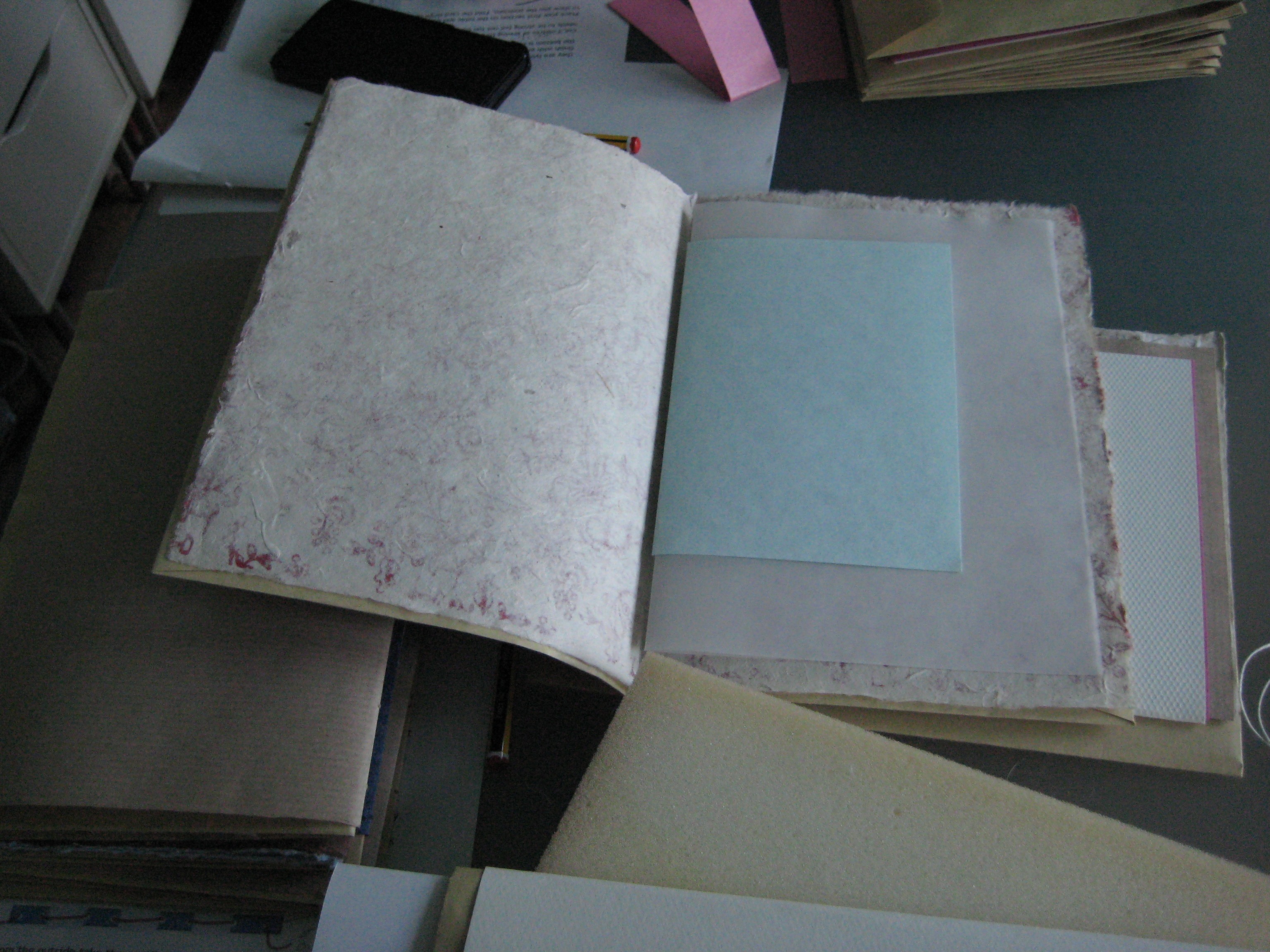
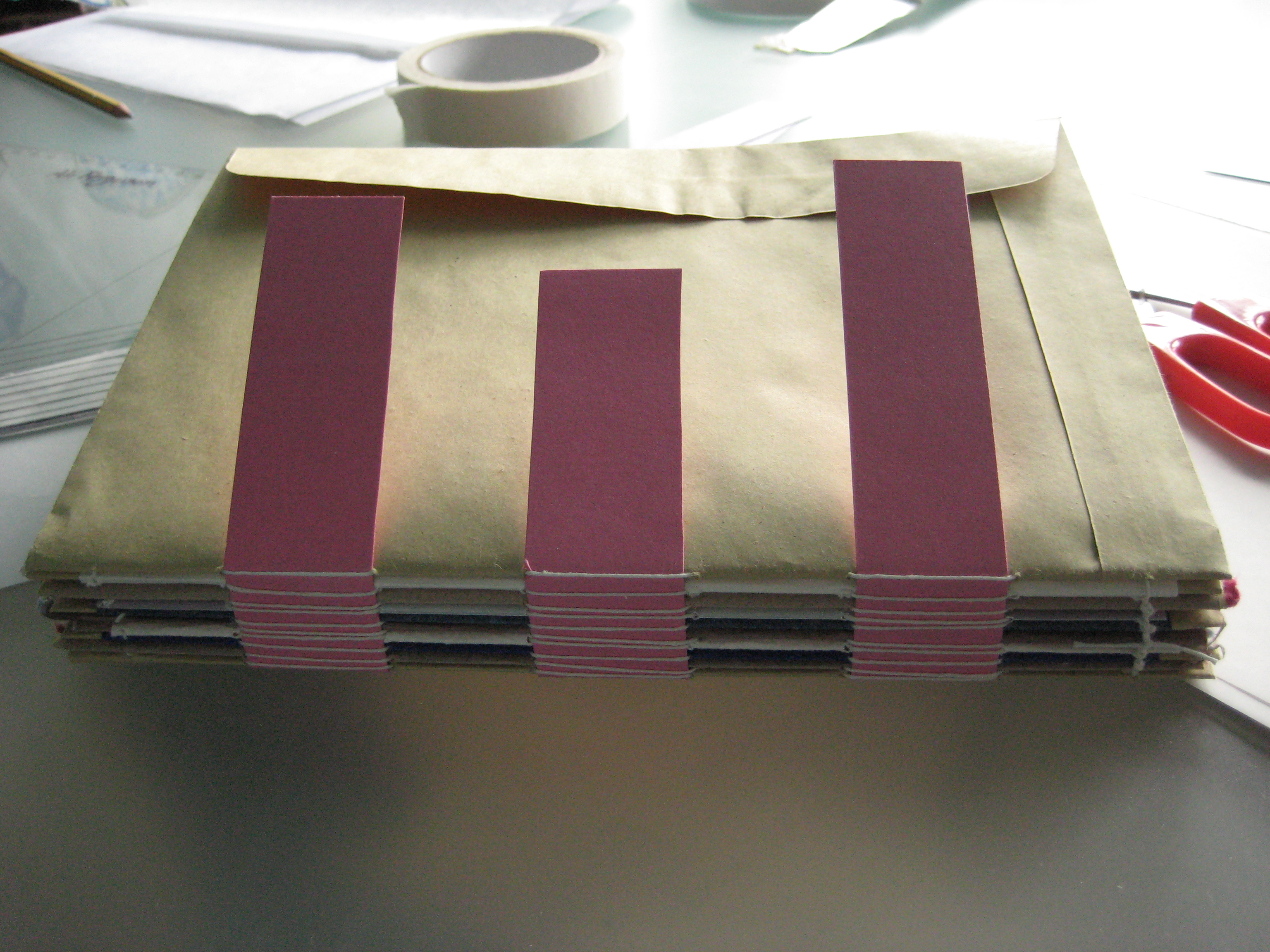
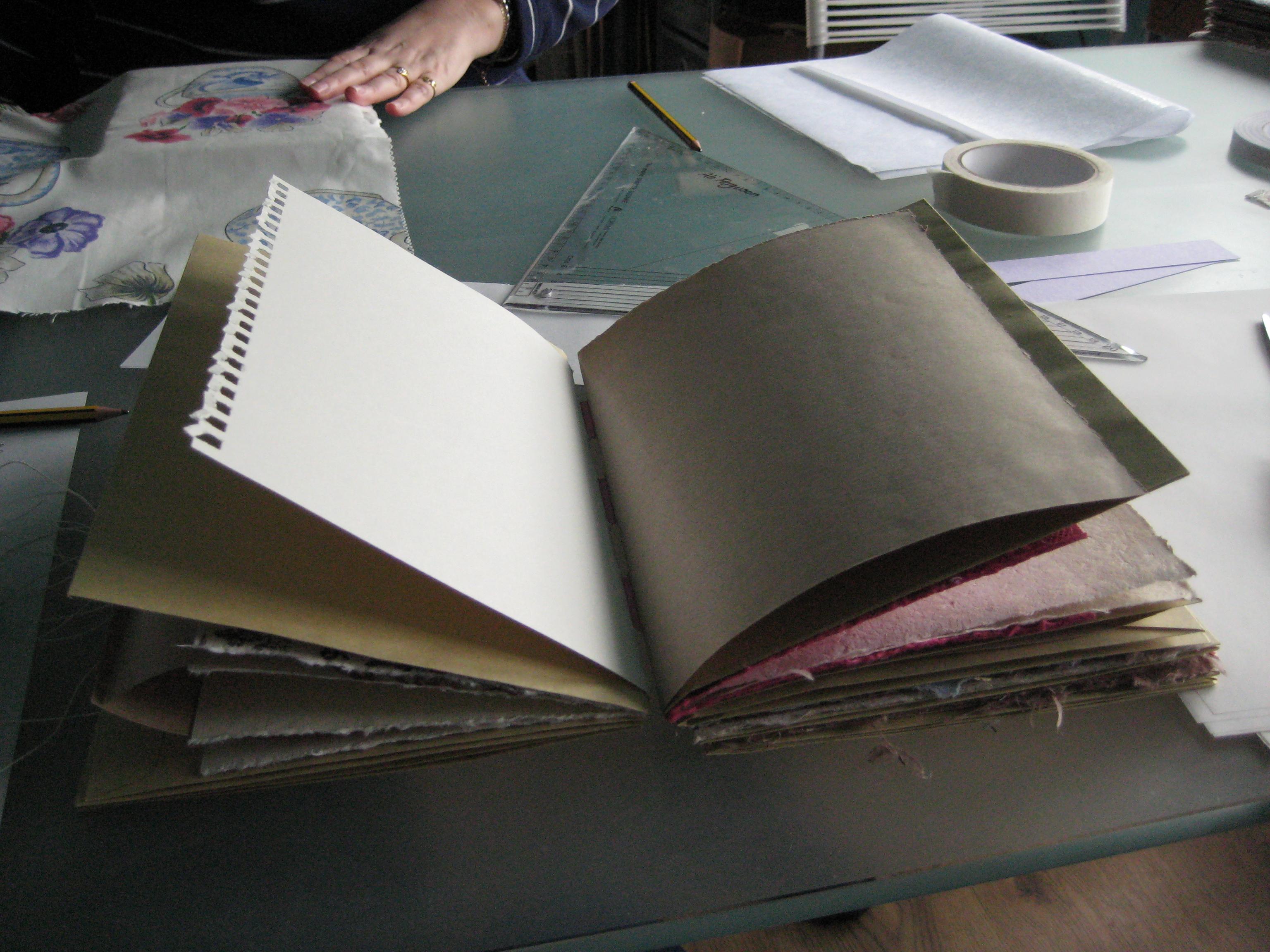
Finished journal waiting for use
My theme was ‘flora and flowers’. Not a neat subject matter, but my garden was inspiring me at the time so I just went with that. I love to have meanings in things so I concentrated my thoughts on the ‘meanings of flowers and plants’. This really helped a lot. On top of this I put the idea for what the final piece might be – in this case I chose a collar. A google search for ‘floral collar’ showed me this…

Find more information on this at the Metropolitan Museum website
That was it really. I picked my flora and plants to match this theme and used marigolds (grief) and cypress (death).I’m not sure if this constitutes a ‘typical’ design process but it’s what happened to me. I was turning this into a piece of costume, it’s wearable and it had to have a purpose – and this is typical of my thought process.
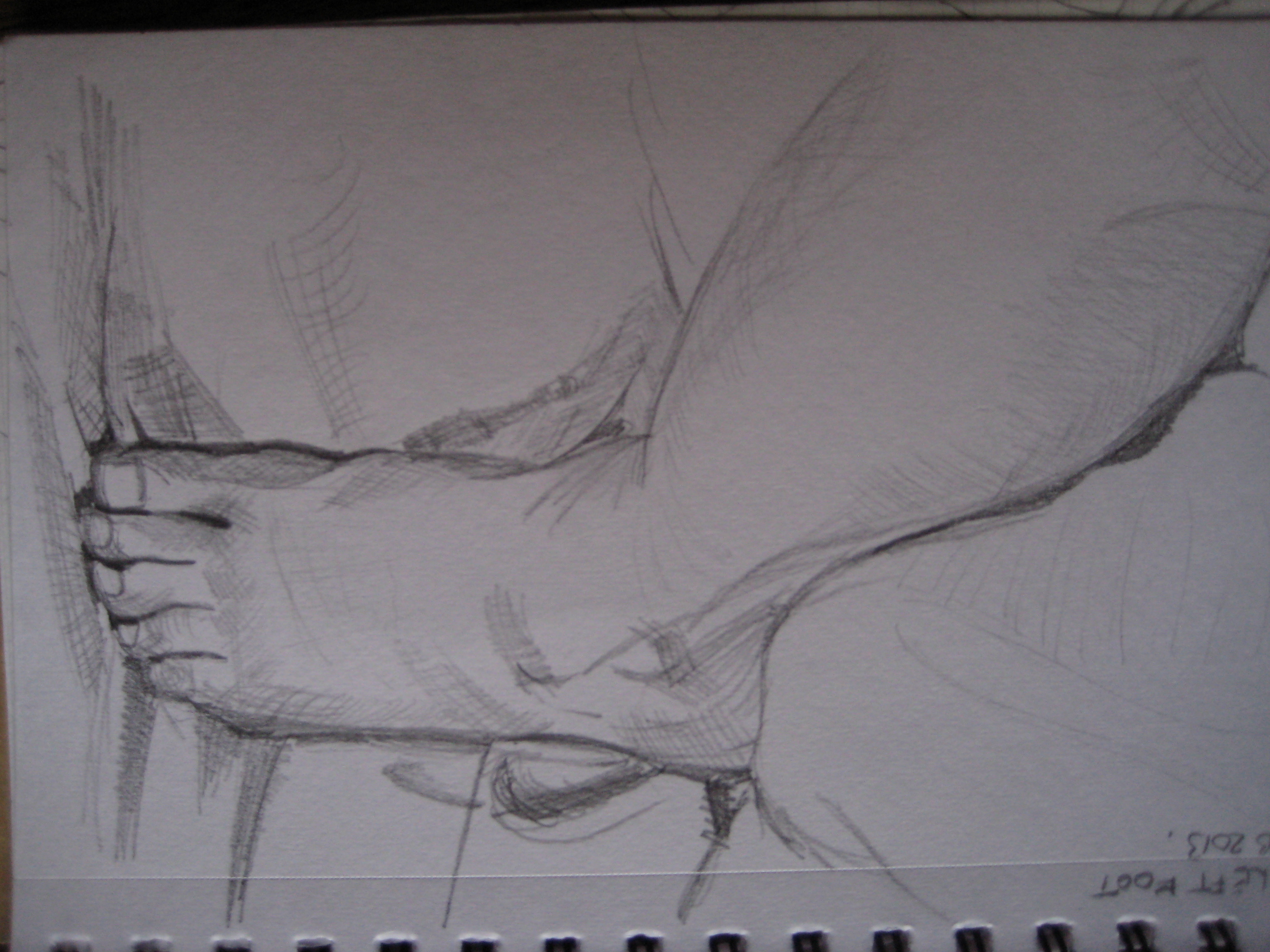
This I filled with all sorts of sketches and doodles… not always in pencil/pen… sometimes made of fabric…

Themebook thoughts

Exploring stitches with sketch
Sometime sketches would lead to patterns and other shapes…

Original sample and sketch…

… turns into a repeatable pattern and and edge design
There was no real clear-cut step-by-step process. I did a lot of exploring and playing with materials. I would spend time pushing scraps of fabric around, laying them out on top of each other, stitching folds in things, trying to recreate an effect.
Thinking about the funeral collar prompted me to look at mummification wrapping in the NMS.

Mummification wrapping at the NMS
I particularly like the time taken to produce these designs, the depth that is achieved and the thought that goes in to producing the precise weave that will prevent slipping as the layers of linen are applied. Admiration all the way.

Bonkuk Koos’ Mummy dress – an inspiration
From these ideas I was inspired to try my own. With a little help from instructions from Collette Wolffs ‘Manipulating Fabric’ book.

Mummy wrapping sample
This was a very satisfying sample to make. It’s obviously not the same as Bonkuk Koos’ work, I couldn’t quite figured out how he had managed that piece of fabric. The producing a piece of fabric was actually an inspiration I actually missed in a way, noticing only in hindsight. My loss really, but now I have it reflectively I’ll know for next time! I tried placing my folded fabric sample onto a tailors form, and it worked or not in various ways. I couldn’t quite figure out to get it to sit correctly over contours of a body, so I decided to leave it.
However, what it did do was produce pleats and ruffle effects around the neck line. So that was another avenue to explore. I’d seen some of Gareth Pughs designs for 2009 and these were very inspiring.

Structural ruffles by Gareth Pugh
I’d also seen Jessica Prestons work, and of course Anne Kyyro Quinns’ designs were still in my mind from previous projects.

Ruffles and pleats for structure in fabric – Jessica Preston

The petal shapes produced by the wave of felt were intresting – AKQ
It did cross my mind to flat-out copy that wave and twist idea as I find it so pleasing. But that really isn’t what this project is about. I note it as an inspirational influence and move on. I can similar shapes in some of my themes and sketches as I work, so I know the influence is there.
One thing that was influencing me was the materials I was using. I’m quite fond of jute and hessian scrim materials. Making a sample of leylandii cypress was a starting point for this off-shoot idea.

Material sketch – jute string
I’ve used jute scrim fabric in the past and when it comes in its natural form it can be quite ordinary. Dye it in the washing machine and it becomes a different thing entirely. Playing with materials I did just this, and dyed it green. It gave me a lovely wavy knotted effect and hung in matted tendrils at the ends. Weaving orange chiffon through it didn’t look right until I dropped it on the workbench. The cartoon for the final piece just fell out of it.

‘Cartoon’ for the final piece
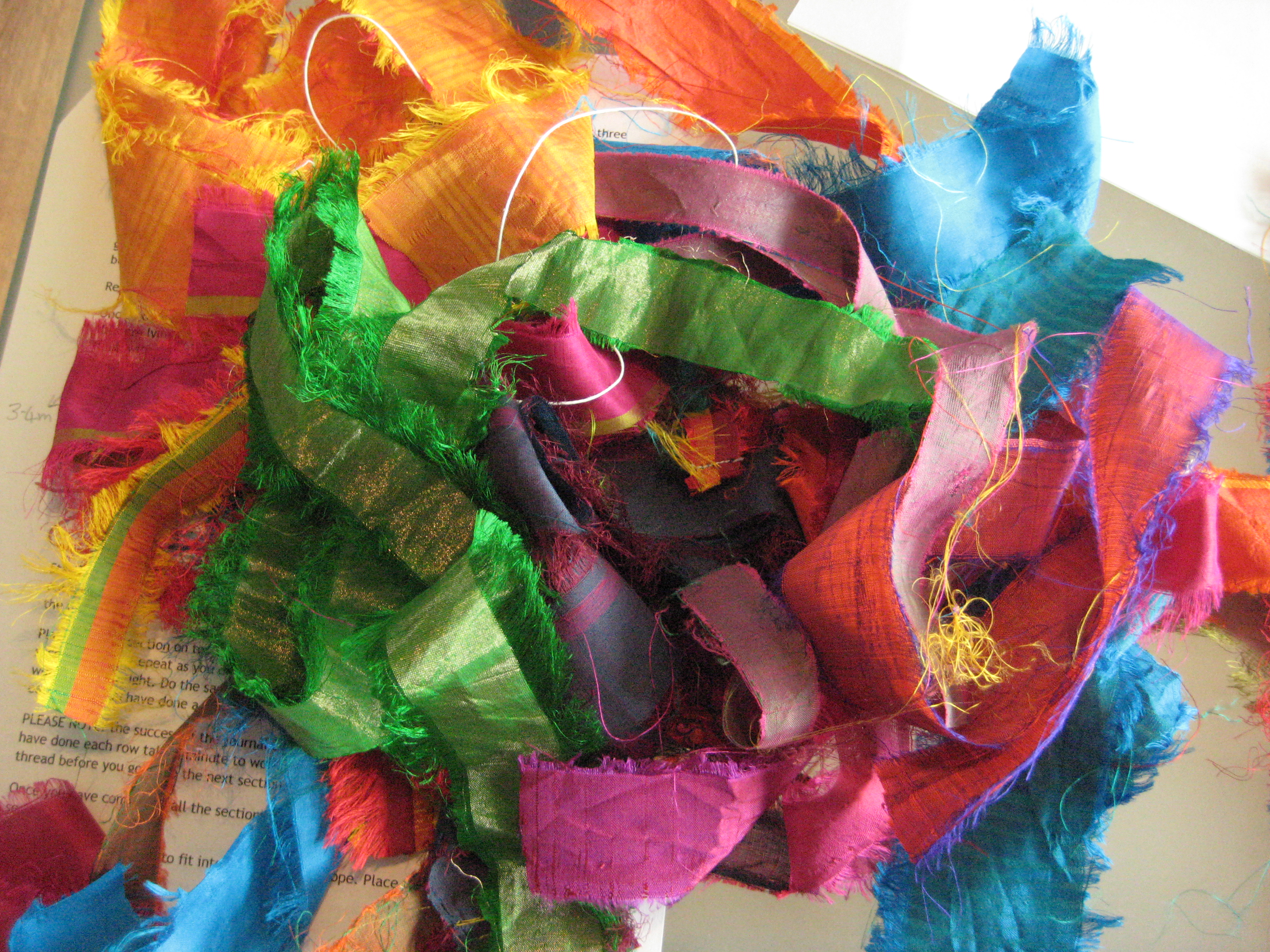
As I said, I wasn’t pleased with the plain bright torn chiffon. I like the torn effect, but weave just wasn’t working for me. What it reminded me off though was some inkjet printing I’d been trying. The marigold piece I’m using is one of my own photo images, and I’d been trying some of the inkjet printing techniques I’d learnt at a recent workshop. It seems to be a very popular and easily accessible tool to have as a textile artist.
The image was printed onto poplin cotton. I was considering embroidery into it, but couldn’t really see a reason why I would do this so it hadn’t got that far yet. As such, the image was just sitting there, printed, and not going anywhere. I wanted strips of orange, so I tore it up.

Torn photo image
This was threaded through the scrim again. I felt the effect gave me a separated feeling, as of individual petals without having to go for the obvious petal shapes.

Photo image threaded through scrim – as separated petals
Once this was in place I returned to the ruff idea. It has a strong formal shape, and the structure of ruff itself seemed to combine not only the colour but also the shapes I’d been playing with, of petals and stem parts.

Ruff – a combination of shape and colour
Once all the elements were combined it looked like this…

Project 10 – A Piece Of Your Own
I’ve added some elements that were not part of the cartoon, such as crocheted wire through the scrim, and handmade felt beads. Overall I feel this is very experimental and I don’t think I’ve completed the design process entirely. What I didn’t have to start with was a specific enough design brief. The project 10 process was very organic in that respect. Next time I will set myself a design brief to keep things more in check.
I like the final piece, it’s definitely more costume collar than anything else. I feel it needs a character to wear it now. I don’t think I made full use of all the tools that the first OCA textiles course gave me in this respect, but I did do a lot of exploring and I’m taking a few more lessons and experiences away with me. Also, I’m taking away more practise, and that’s always a good thing.